
Walk into most offices, retail spaces, or apartment complexes in the Tri-Cities and you’ll notice the window treatments look nothing like what you’d find in a well-designed home. That’s not a coincidence. Commercial and residential window treatments are built for different environments, different demands, and different goals. Treating them as interchangeable is one of the most common mistakes property owners and managers make when planning a window treatment project.
Whether you’re outfitting a new office in Kennewick, refreshing a storefront in Pasco, or updating the window shades in your Richland home, the right choice depends on understanding what each setting actually requires. And in the Tri-Cities, where summer afternoons regularly push 100 to 110 degrees and strong winds are a seasonal reality, those requirements carry real weight for both commercial and residential properties.
Here’s a practical breakdown of how these two categories differ, and what to look for in each.
In this post, you’ll learn:
- What sets commercial window treatments apart from residential options
- Why residential window shades and window blinds require room-by-room thinking
- How motorization and energy efficiency apply to both settings
- Why professional installation matters regardless of the project size
What Makes Commercial Window Treatments Different?

Commercial spaces put window treatments through a level of daily use that most homes never see. A single office building might have dozens or hundreds of windows, each one operated repeatedly by different people throughout the day. That kind of traffic demands durability that standard residential products simply aren’t built for. Commercial-grade hardware, heavier-duty fabrics, and mechanisms designed for high-cycle operation are the baseline, not an upgrade.
Consistency matters just as much as durability. A storefront, office complex, or multi-unit property needs a uniform appearance across every window. Mismatched shades or uneven window blinds read as unprofessional and can undermine a brand’s image from the street. Commercial projects are typically specified with a single product line and finish across the entire space to maintain that cohesive look.
Light control in commercial settings is less about ambiance and more about function. Reducing glare on computer screens, managing natural light in conference rooms, and keeping workspaces comfortable during peak sun hours are practical productivity concerns. In the Tri-Cities, where intense afternoon sun hits west-facing office windows hard, the right window shades can make a measurable difference in how comfortable and usable a workspace actually is.
Commercial projects also carry compliance considerations that residential work doesn’t. Flame-retardant fabric requirements, ADA accessibility standards for operable controls, and local building codes all factor into product selection. These aren’t optional checkboxes. They’re requirements that affect which products can legally be specified for a given space.
What Makes Residential Window Treatments Unique?
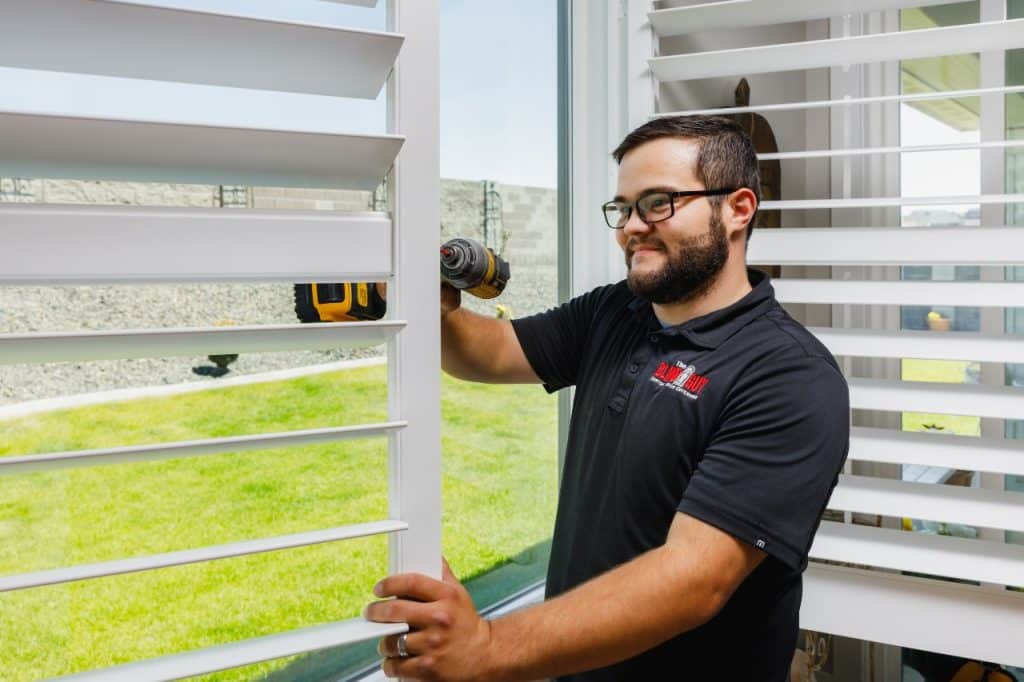
At home, the priorities shift. Comfort, privacy, personal style, and room-specific function take the lead. A bedroom has completely different needs than a kitchen, and a bathroom calls for something different than a living room. That room-by-room thinking is what makes residential window treatment decisions more nuanced than they might first appear.
Bedrooms typically need blackout or room-darkening window shades for sleep quality and privacy. Kitchens and bathrooms call for moisture-resistant materials that clean easily and hold up to humidity. Living rooms benefit from versatile window blinds or solar shades that can shift from open and airy to private and filtered depending on the time of day. Home offices share something with commercial spaces: glare control matters, and the right window shades let natural light in without washing out a screen.
The design palette for residential projects is also far wider. Cellular shades, woven woods, plantation shutters, solar shades, layered treatments pairing shades with drapery panels — the options reflect personal taste and home decor in a way commercial specifications rarely allow. That flexibility is one of the things homeowners value most, and it’s where a knowledgeable local partner makes the biggest difference.
Energy efficiency is another residential priority that goes beyond aesthetics. An Oak Ridge National Laboratory study found that cellular shades can deliver up to about 15% total site energy savings for heating and cooling in certain residential scenarios compared with homes that have no shading devices. In a Tri-Cities home where the air conditioner runs hard from June through September, that kind of performance adds up.
Motorization and Smart Controls: A Shared Priority
Motorized window treatments have moved well past the luxury category. They’re now a practical choice for both commercial and residential projects, and the reasons overlap more than you might expect.
In commercial spaces, motorized systems simplify control across large footprints. Instead of manually adjusting dozens of window blinds throughout the day, a building manager can schedule shades to close during peak sun hours and open again in the evening. That kind of automation reduces wear on individual units, lowers the demand on HVAC systems, and keeps the space consistently comfortable without requiring constant attention.
At home, motorized window shades connect directly to smart-home platforms including Amazon Alexa, Google Home, Apple HomeKit, and Samsung SmartThings. You can close every shade in the house from your couch, set a schedule that responds to the sun’s position, or tie your shades into a broader home automation scene. For tall windows, skylights, or multi-story spaces where manual operation is awkward, motorization isn’t just convenient. It’s the practical solution.
Both settings benefit from professional programming and installation. Motor sizing, limit-switch setup, electrical access, and smart-system connectivity all affect whether a motorized system runs smoothly for years or causes headaches from day one.
Energy Efficiency in Both Settings
Window shades and window blinds reduce HVAC costs in offices and homes alike by managing solar heat gain before it becomes a cooling problem. Light-colored and reflective fabrics push heat back out rather than absorbing it, which keeps interior temperatures more stable during the Tri-Cities’ long, intense summers.
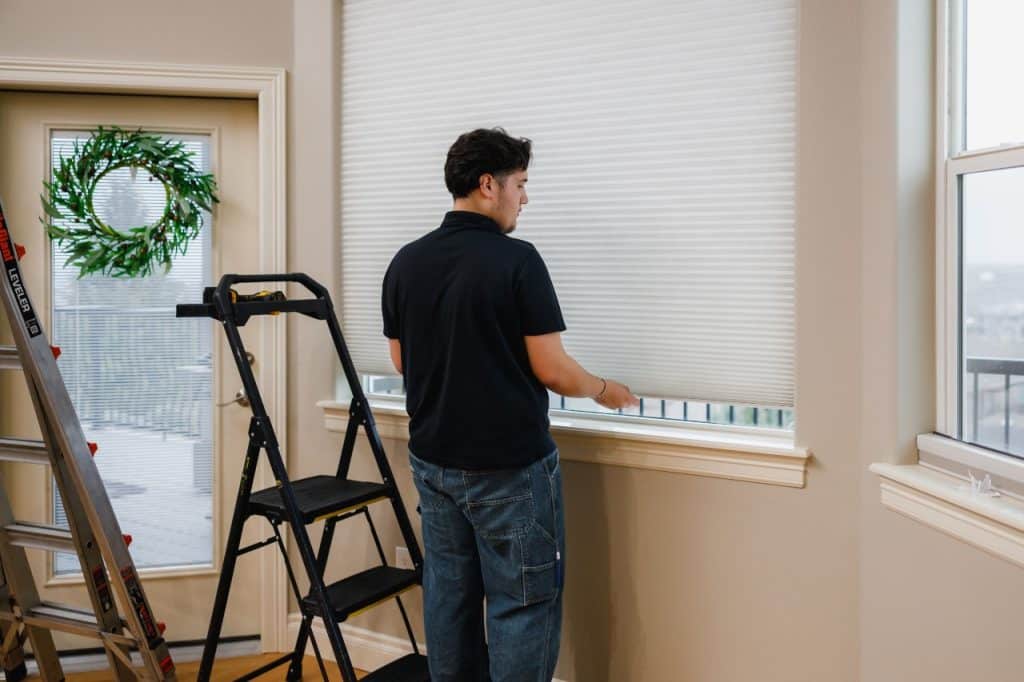
Cellular shades are the top performer for year-round insulation. Their honeycomb pockets trap air and create a thermal barrier between the glass and the room, reducing heat gain in summer and slowing heat loss in winter. For a Richland home or a Kennewick office building dealing with both 105-degree July afternoons and freezing January nights, that dual-season performance matters.
Why Professional Installation Matters for Both
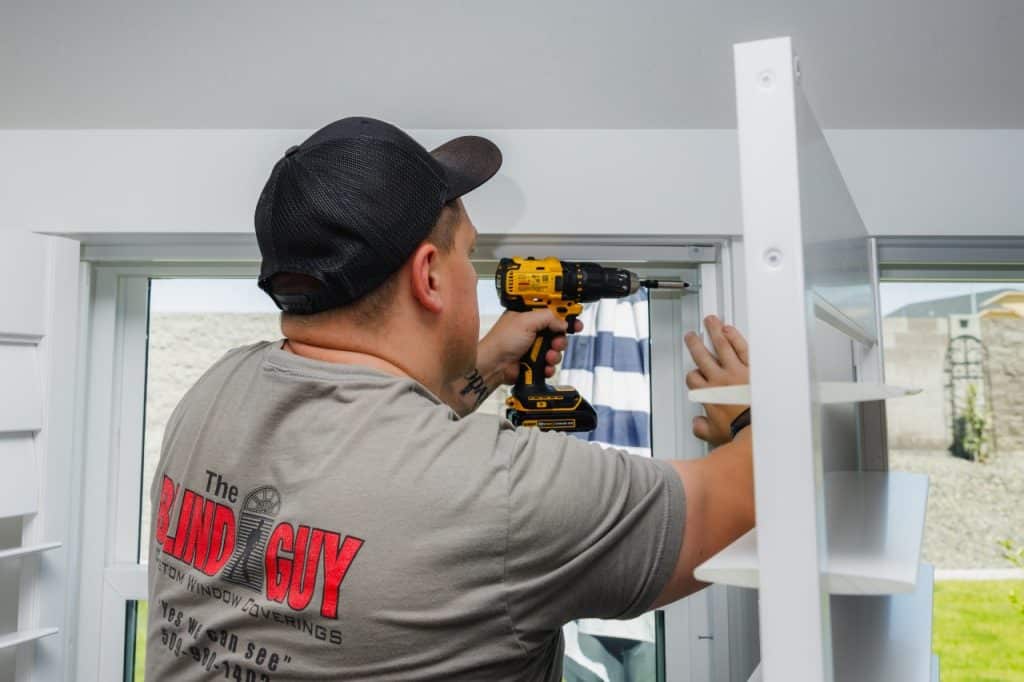
A window treatment that doesn’t fit correctly doesn’t perform correctly. Gaps along the frame let light and heat through. Crooked blinds look unprofessional and wear unevenly. Motorized systems installed without proper motor sizing or electrical planning cause problems that are expensive to fix after the fact.
Professional measurement accounts for windows that aren’t perfectly square, frames with obstructions, and the difference between inside and outside mount applications. For residential projects, that precision delivers the flush, built-in look that makes custom window treatments worth the investment. For commercial projects, it ensures consistency across every window in the building and protects manufacturer warranties that often require certified installation.
Commercial jobs add another layer: contractor coordination, phased installation timelines, and the need to keep a business operational while work is underway. That kind of project management requires experience with commercial-scale work, not just residential installs.
Choosing the Right Partner in the Tri-Cities
The Tri-Cities climate affects product selection in ways that a national chain or an online retailer won’t account for. Intense sun, persistent wind, dry summers, and cold winters create a specific set of demands that local expertise addresses directly. What works in a mild Pacific Coast climate isn’t always the right call in Kennewick, Pasco, or Richland.
Blind Guy of Tri-Cities handles both commercial and residential projects across the region. Whether you’re managing a commercial property that needs consistent, durable window blinds across a large space or a homeowner looking for room-by-room window shades that balance comfort, privacy, and energy efficiency, the approach starts the same way: a conversation about your space, your goals, and what the local environment requires.
Ready to Find the Right Fit for Your Space?
Not sure whether your project calls for commercial or residential window treatments? That’s exactly the kind of question we help answer. Schedule a free consultation with Blind Guy of Tri-Cities and get expert recommendations tailored to your home or business. We’ll handle the measuring, walk you through the options, and make sure the finished result looks and performs the way it should. Call us at (509) 980-1402 or book online today.