
You’ve probably done the browsing. You’ve seen the catalog photos, scrolled through the options, and landed somewhere between overwhelmed and undecided. The shade that looks perfect above the bed also looks like it belongs in the kitchen. The shutters in the bathroom inspiration photo might work in the living room too. Maybe one style covers everything?
It doesn’t. And in the Tri-Cities, that matters more than it might somewhere else. Our summers push west-facing bedrooms past comfortable by mid-afternoon. Our winters pull heat straight through single-pane and older double-pane glass. Kitchens here deal with the same temperature swings as everywhere else, plus the steam and grease that come with a working kitchen. Bathrooms need privacy and light at the same time, and they need window treatments that can handle humidity without warping or degrading.
The right window treatment for each room depends on what that room actually does to a window. This guide walks through bedrooms, kitchens, and bathrooms one at a time, compares the real options, and tells you where each one falls short.
Why the Same Window Treatment Doesn’t Work in Every Room
Every room puts different demands on a window treatment. A bedroom asks for light control and insulation. A kitchen asks for durability and easy cleaning. A bathroom asks for moisture resistance and privacy. Those aren’t the same list.
A fabric shade that softens light beautifully in a living room will trap grease in a kitchen and degrade in a steamy bathroom. Real wood blinds that look sharp in a dining room will warp above a kitchen sink within a season or two. A sheer panel that works in a street-facing living room is the wrong call in a ground-floor bathroom.
Choosing by looks alone, without accounting for what the room does, means replacing the treatment sooner than you planned. And even the right product can underperform if it isn’t measured and installed correctly for that specific window. A gap at the frame is all it takes to let heat, humidity, or light in around the edges of a treatment that should be blocking all three.
Bedrooms: Light Control and Sleep Come First
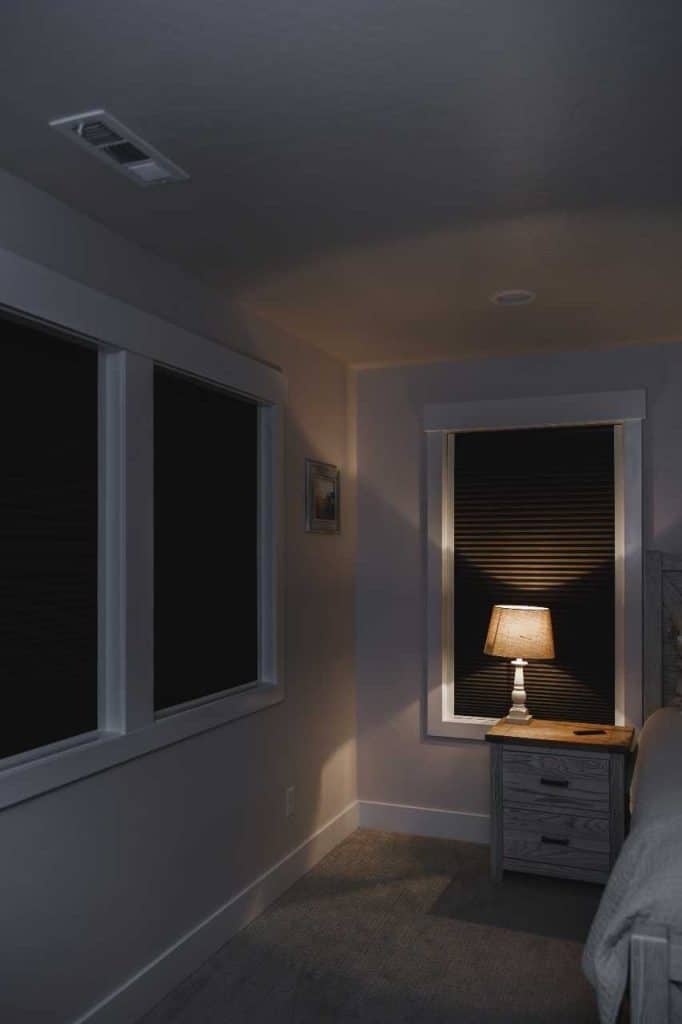
West-facing bedrooms in Kennewick, Richland, and Pasco take a beating in July and August. By late afternoon, the sun is driving directly into the room, and a bedroom that was comfortable in the morning becomes a heat trap by the time you want to sleep. That’s the first problem window treatments for bedrooms need to solve.
The second problem is light at the wrong time. According to the Sleep Foundation, light plays a central role in regulating circadian rhythm, the body’s internal clock that signals when to be alert and when to rest. It also affects melatonin production, the hormone that promotes sleep. Excessive light at night may interfere with both. A bedroom that lets in early morning light or streetlight through the edges of a shade is working against you.
Here’s how the main options compare.
Blackout shades are the strongest choice for heat reduction and sleep quality. We find they block nearly 100% of incoming light, which means no early sunrise creeping in at 5 AM and no afternoon sun heating the room through the fabric. They pair well with cellular construction, which adds an insulating air pocket between the glass and the room. The honest limit: a blackout shade in a room that doubles as a home office can feel heavy during the day. If you need the room to function in daylight, that’s worth thinking through.
Cellular shades without blackout lining are a strong middle-ground option. The honeycomb construction traps air between the window and the room, which slows heat transfer in both directions. They come in light-filtering and room-darkening versions, so you can dial in how much light you want without committing to full blackout. The honest limit: a light-filtering cellular shade won’t satisfy a shift worker or a child who sleeps past sunrise. If darkness is the priority, the blackout version or a blackout shade is the right call.
A layered approach pairs a light-filtering shade with drapery panels. During the day, the shade softens light and reduces glare. At night, the drapery adds privacy and a second layer of insulation. This is the most flexible option for a bedroom that serves multiple purposes. The honest limit: it’s also the most involved to install and the most to manage day to day.
One thing that matters across all three: fit. A blackout shade with a quarter-inch gap at the top frame lets light pour in right where you don’t want it. We measure every window before anything is ordered, so the treatment sits flush against the frame and does the job it’s supposed to do.
Kitchens: Durability and Easy Cleaning Win
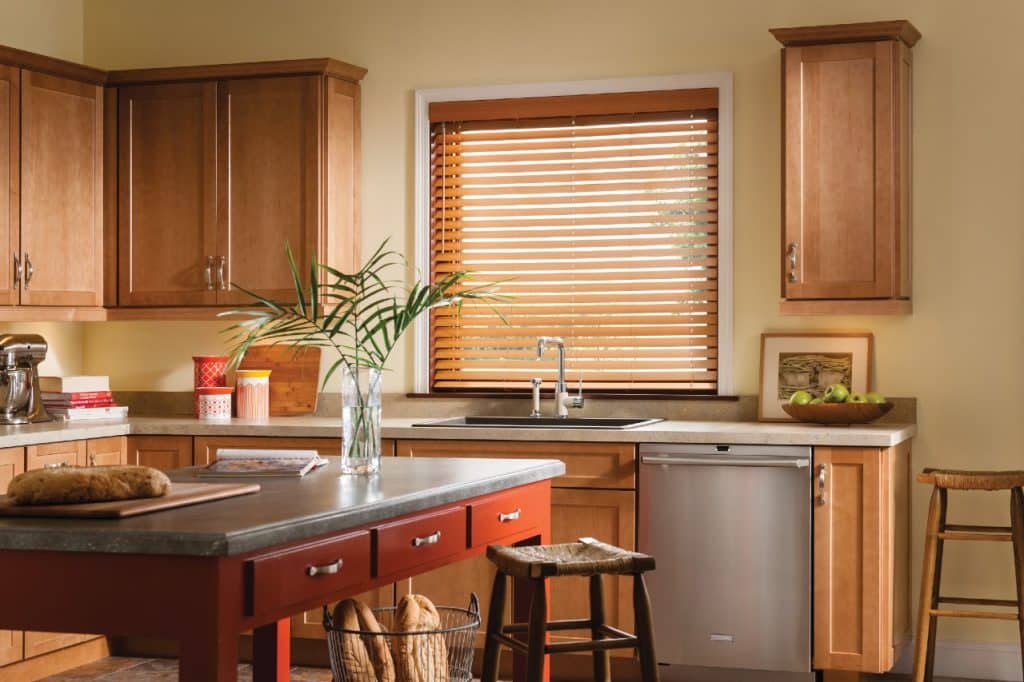
The kitchen is the room where material choice matters most. Steam from the dishwasher, grease from the stovetop, and temperature swings from cooking and running hot water put more stress on window treatments than any other room in the house. Fabric-based treatments that look great at installation can trap grease, absorb moisture, and become difficult to clean within months.
Here’s how the main options for window treatments for kitchens compare.
Faux wood blinds are the practical workhorse for most Tri-Cities kitchens. They resist moisture and warping, wipe clean with a damp cloth, and hold their appearance through temperature fluctuations. They’re not the most visually dramatic option, but they’re the one that still looks good two years after installation.
Composite (engineered) shutters are a more permanent, higher-end option. We recommend them for kitchens because they resist moisture and humidity better than real wood, and they add visual weight and resale value that blinds don’t. If you’re renovating a kitchen and want a finished, built-in look, shutters are worth the investment.
Roller shades with light-filtering or solar fabric are a strong choice where a clean, streamlined look is the priority. They’re easier to clean than fabric shades, and solar options manage morning and evening sun without blocking the view. The honest limit: roller shades with fabric that isn’t specifically rated for kitchen use can still absorb grease over time. Ask about the fabric before you commit.
Two things to avoid in a kitchen: real wood blinds and fabric Roman shades. Real wood warps when it’s exposed to moisture and temperature swings, and a kitchen window above the sink is exactly the wrong place for it. Fabric Roman shades look beautiful, but they trap grease in the folds and are genuinely difficult to clean in a high-use kitchen. We see both choices come back to us as replacements. Save yourself the trouble.

Bathrooms: Humidity Resistance and Privacy Together
Bathrooms ask for two things at once that can pull in opposite directions: privacy and natural light. A treatment that solves one without the other isn’t really solving the problem.
Here’s how the main options for window treatments for bathrooms compare.
Faux wood blinds are the most reliable moisture-resistant option for most bathrooms. They won’t warp or crack in a steamy shower environment, they wipe down easily, and they give you precise control over light and privacy. For a secondary bathroom or a window directly above a tub or shower, faux wood is the straightforward answer.
Composite or vinyl shutters handle humidity well and provide strong privacy with a more finished look. For a primary bathroom where the aesthetic matters as much as the function, shutters are worth considering. They add a built-in, permanent feel that blinds don’t.
Top-down/bottom-up shades are a smart solution for street-facing or ground-floor bathrooms. They let you bring light in from the top of the window while keeping the lower portion covered, so you get natural light without sacrificing privacy. This is one of the most practical options we install in bathrooms, and it’s underused.
Cellular shades in moisture-resistant fabric add insulation value in a bathroom that loses heat through the window in winter. If your bathroom runs cold and you want to address that without sacrificing light, a cellular shade in a moisture-resistant fabric is worth a conversation.
The honest limit across all bathroom options: fabric-based treatments without moisture-resistant construction will degrade over time, regardless of how good they look at installation. A light-filtering sheer that works beautifully in a living room is often the wrong call in a bathroom with a street-facing window or a shower nearby.
Quick Comparison: Window Treatments by Room
| Room | Top Recommendation | Runner-Up | What to Avoid | Key Reason |
| Bedroom | Blackout shades (cellular construction) | Cellular shades (room-darkening) | Sheer or light-filtering only | Light and heat control are the primary demands |
| Kitchen | Faux wood blinds | Composite shutters | Real wood blinds, fabric Roman shades | Moisture, grease, and temperature swings degrade the wrong materials fast |
| Bathroom | Faux wood blinds | Composite or vinyl shutters | Fabric without moisture-resistant construction | Humidity degrades standard fabric treatments over time |
Why Custom Fit Changes the Equation in Every Room
The right product in the wrong size doesn’t perform the way it should. This is true in every room, but it’s most obvious in the rooms where the stakes are highest.
A faux wood blind that doesn’t sit flush against the frame lets steam and humidity work in behind it. A blackout shade with a gap at the top lets light in right where you’re trying to block it. A cellular shade that doesn’t fit tightly against the frame loses the insulating performance that makes it worth choosing in the first place. The performance of any window treatment depends on the fit.
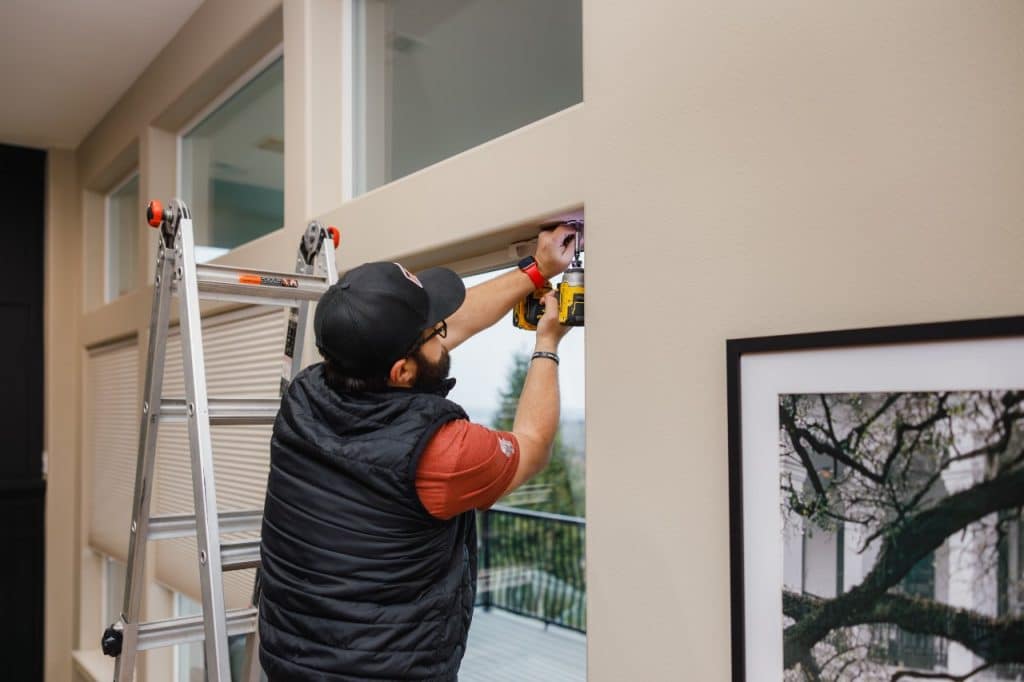
That’s why we measure every window before anything is ordered. Tri-Cities homes settle. Frames go slightly out of square. Windows that look standard often aren’t, once you put a level and a tape measure to them. We account for that before the treatment is built, so it sits flush, operates cleanly, and does what it’s supposed to do from day one.
Ready to Get the Right Treatment in Every Room?
Three rooms, three different answers. That’s the honest reality of choosing window treatments for bedrooms, kitchens, and bathrooms, and it’s exactly the kind of decision that’s easier with a local expert who’s seen what works and what doesn’t in Tri-Cities homes.
We offer free in-home consultations throughout Kennewick, Richland, Pasco, and Wenatchee. No pressure, no obligation. We come to you, look at the actual windows, and help you figure out what makes sense for each room. Reach out to The Blind Guy of Tri-Cities to schedule yours.