
You’ve probably already turned the heat up once or twice this fall. The mornings are colder, the evenings come earlier, and somewhere in your house there’s a room that just never quite warms up. If you’ve been standing near a window and felt that familiar chill radiating off the glass, you already know where a lot of that heat is going.
Windows are the weakest point in a home’s thermal envelope. Even double-pane glass has a fraction of the insulating value of a well-insulated wall. Heat moves toward cold, and on a January night in Kennewick or Wenatchee, the glass is very cold. The right window treatments won’t change the glass, but they can change what happens in the air between the glass and your living space. That’s where winter-ready window treatments earn their place.
This isn’t about aesthetics, though the right treatments look great. It’s about keeping your home comfortable from November through February without running your furnace nonstop.
In this post, you’ll learn:
- Why windows lose heat even when they’re closed
- Which winter-ready window treatments perform best for insulation
- What honest trade-offs look like for each option
- Why fit and installation matter as much as the product itself
- How to match the right treatment to each room in your home
Why Windows Lose Heat Even When They’re Closed

Glass doesn’t insulate. That’s the short version. The longer version involves three things happening at once, and understanding them helps you choose the right fix.
The first is conduction. Heat moves through solid materials from warm to cold, and glass conducts heat readily. On a freezing night, the interior surface of your window is significantly colder than the rest of your room. Your home’s heat is literally flowing through the glass and out into the dark.
The second is convection. Cold air near the glass surface sinks, pulling warmer room air down to replace it. That’s the draft you feel near a bare window even when it’s fully closed and sealed. The air in your room is circulating against the cold glass and losing heat with every pass.
The third is radiation. Your home radiates infrared heat outward, and glass doesn’t block it well. You can feel this if you hold your hand near a bare window on a cold night without touching it. The chill you feel is your body’s heat radiating toward the cold surface.
All three of these happen simultaneously, and bare windows let all three run unchecked. A well-chosen, properly fitted window treatment interrupts each one by creating a layer of still air between the glass and the room. That air gap is the key. Still air is a poor conductor, it doesn’t circulate the way room air does, and it reduces the temperature difference at the glass surface. The result is a room that holds warmth longer and a furnace that doesn’t have to work as hard to maintain it.
The Best Winter-Ready Window Treatments
Not every window treatment is built for insulation. Some are designed for light control or privacy, and they do that job well without doing much for heat retention. The four options below are the ones that actually move the needle on winter comfort.
Cellular (Honeycomb) Shades

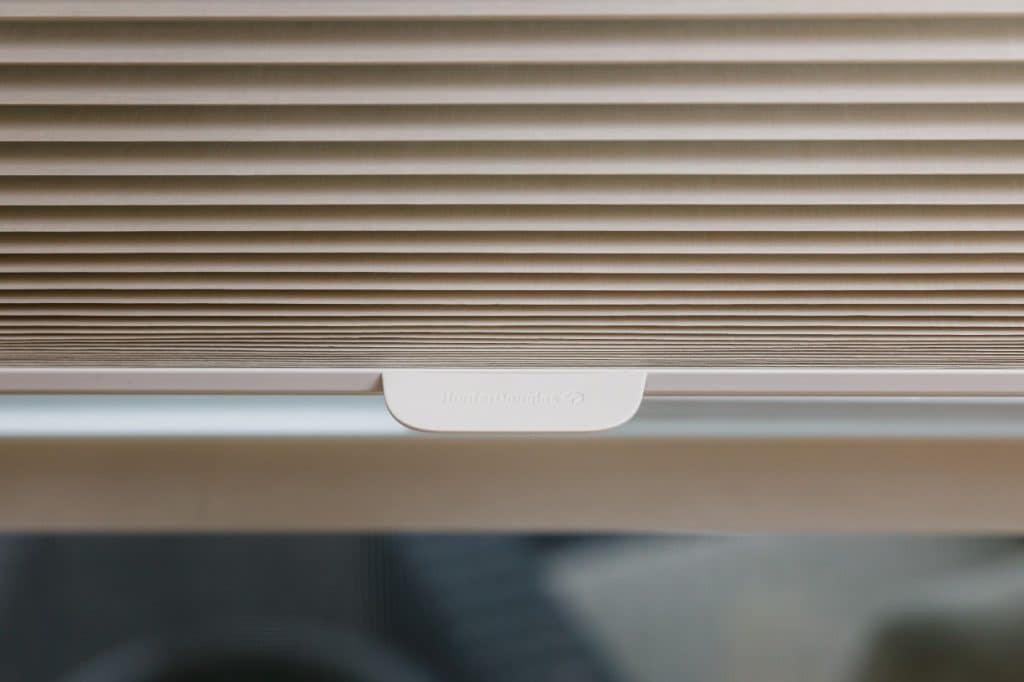
If there’s one treatment built specifically for thermal performance, it’s cellular shades. The honeycomb structure traps air inside individual pockets, creating a thermal barrier between the glass and the room. That trapped air is what sets these shades apart from flat roller shades or standard blinds.
Single-cell construction provides a meaningful improvement. Double-cell construction, where one honeycomb layer sits inside another, adds a second air pocket and increases the insulating value further. For north-facing rooms, bedrooms, and any window with a large glass expanse, double-cell cellular shades are worth the investment.
The research backs this up. According to the U.S. Department of Energy, insulating cellular shades can decrease heat loss through windows by 40% or more in winter. An Oak Ridge National Laboratory study published in Building and Environment (2022) found total site energy savings for heating and cooling of up to approximately 15% for a home with a gas furnace, and up to approximately 9% for a home with a heat pump, compared with homes using no shading devices. Those figures reflect specific conditions and won’t be identical for every home, but they point to real, measurable impact.
The honest limit: cellular shades perform best when they’re mounted close to the frame with minimal gaps at the edges. A quarter-inch gap at the top or sides lets cold air bypass the shade entirely, and the air pocket does nothing if cold air can flow around it. Fit is everything here, which is why we’ll come back to measurement and installation in a moment.
Layered Treatments: Shade Plus Drapery
Two thermal barriers are better than one. Pairing a fitted cellular or roller shade with a lined drapery panel creates two separate air gaps: one between the glass and the shade, and one between the shade and the room. Each layer slows heat transfer, and together they outperform either treatment on its own.
This approach works especially well in living rooms with large windows or sliding glass doors, where the glass area is significant and the heat loss is proportionally higher. A lined drapery panel hung close to the wall and extending to the floor also reduces convection drafts along the window wall.
The honest limit: layering adds cost and visual weight. It’s not the right call for every room or every style preference. A minimalist space or a small window may not need or want the added bulk. But for a drafty living room in Pasco or a large picture window in Wenatchee, the combination is hard to beat.
Roman Shades With Thermal Lining
Roman shades are a design-forward option that can add real insulation when they’re built with the right lining. A thermal or blackout lining adds density and reduces the amount of cold air that moves through the fabric. In living rooms and dining areas where you want warmth without sacrificing style, a lined Roman shade is a practical choice.
The honest limit: the insulating value depends entirely on the lining. An unlined Roman shade is a beautiful window treatment, but it offers minimal thermal benefit. If insulation is the goal, the lining isn’t optional.
Roller Shades With Thermal or Blackout Fabric
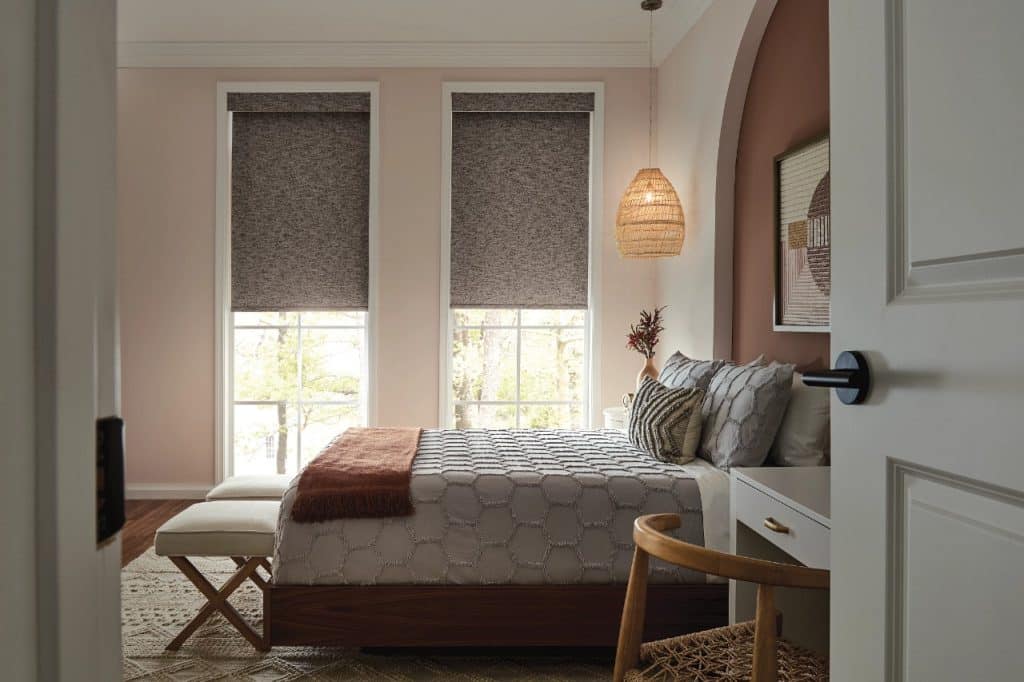
Roller shades are the clean, minimalist option. They’re straightforward to operate, they work well in contemporary spaces, and a shade made with thermal or blackout fabric does provide a meaningful reduction in heat loss compared to bare glass.
The honest limit: roller shades perform best when they’re pulled fully down at night, when heat loss through windows is at its peak. Partial use, leaving the shade halfway up through a cold evening, reduces the benefit significantly. For homeowners who want simplicity and are willing to use the shade consistently, this is a solid choice. For rooms where the shade is likely to stay partially raised, a cellular shade will deliver more reliable performance.
Why Fit Matters as Much as the Product
Here’s something we see constantly in homes across the Tri-Cities and Wenatchee: a homeowner installs new shades, expects their heating bill to improve, and it doesn’t. The shades look fine. But there’s a gap at the top of the frame, or the shade sits an inch away from the glass, or the window isn’t quite square and the shade doesn’t sit flush on one side.
That gap is where the insulation fails. Cold air doesn’t need much space to move. A quarter-inch opening at the frame is enough to let convection drafts bypass the shade entirely, and the air pocket that makes cellular shades effective never forms properly.
Most windows aren’t perfectly square. Homes settle, frames shift, and older construction in Richland, Kennewick, and Pasco often has windows that are slightly out of true. A shade cut to a standard size won’t account for that. A custom-fit treatment, measured to the exact dimensions of each window, sits flush against the frame and closes the gaps that off-the-shelf options leave behind.
This is why professional measurement and installation aren’t upsells. They’re the difference between a shade that performs the way it’s designed to and one that looks right but doesn’t do the job. We measure to the exact frame so the shade sits flush and the air pocket does its job.
Signs Your Home Needs Better Window Insulation
You may already be living with the symptoms. These are the ones we hear about most often from homeowners in Kennewick, Pasco, Richland, and Wenatchee.
- You avoid sitting near certain windows in the evening because the air always feels cold, even with the heat running.
- You’ve noticed condensation or frost forming on the inside of your window glass on cold mornings. That moisture means warm indoor air is hitting a very cold surface, which points directly to heat loss.
- Your heating bill jumps noticeably in December and January, more than you’d expect from the temperature drop alone.
- There’s a room in your house that never quite reaches the temperature on the thermostat, no matter how long the heat runs.
Any one of these is worth addressing. All four together means your windows are working against your heating system every day of winter.
Room-by-Room Guidance for Tri-Cities and Wenatchee Homes
Different rooms have different needs, and the right treatment depends on how the room is used, which direction it faces, and how much glass it has.
Bedrooms benefit most from cellular shades or blackout shades. Consistent overnight temperatures matter for sleep quality, and north-facing bedrooms in particular lose heat steadily through the night. Double-cell cellular shades are the top choice here.
Living rooms with large windows or afternoon sun exposure do well with cellular shades or a layered treatment. If the room has a west-facing window that gets cold in the evening, pairing a cellular shade with a lined drapery panel gives you the strongest thermal performance.
North-facing rooms of any kind should be treated as a priority. They receive no direct sun to offset heat loss, so the window treatment carries the full insulating load. Maximum coverage and a tight fit matter most here.
Sliding glass doors and large glass panels are among the highest heat-loss points in a home. Roller shades with thermal fabric or large panel systems work well for these openings. The key is full coverage: a treatment that doesn’t reach the floor or leaves gaps at the sides won’t perform.
What We Bring to This Problem

A big-box shade can be a reasonable product. What it can’t give you is someone who knows what a Wenatchee winter actually feels like, who has measured hundreds of windows in Richland and Kennewick and Pasco, and who understands that the frame in a 1970s ranch house is probably not square.
We bring local climate knowledge to every consultation. We know which exposures lose the most heat in this region, which products hold up to the temperature swings between a cold January night and a warm February afternoon, and how to fit a treatment to a window that’s been settling for forty years.
Every treatment we install is custom-measured to the exact dimensions of your windows. We handle the measurement ourselves, so the fit is right before anything gets ordered. And we install everything we sell, so if something isn’t sitting flush or isn’t performing the way it should, we’re the ones who fix it.
That’s the gap between buying a shade and having one that actually works. We serve homeowners throughout the Tri-Cities and Wenatchee, and we’d be glad to help you figure out what your home actually needs.
Ready to Stop Losing Heat Through Your Windows?
The coldest months in Richland, Kennewick, Pasco, and Wenatchee are still ahead. Getting the right winter-ready window treatments in place now means your home holds warmth through January and February instead of fighting the cold all season.
We offer free in-home consultations with no obligation. We come to you, measure every window, and give you a clear recommendation for each room and each exposure. No pressure, no guesswork, just honest advice from people who know this climate.
Reach out to The Blind Guy to schedule your free consultation. We serve homeowners throughout the Tri-Cities and Wenatchee, and we’re ready to help you get your home ready for winter.