
By 10 AM on a July morning in Kennewick, your patio furniture is already too hot to touch. The concrete radiates heat upward, the sun presses down from above, and the outdoor space you spent good money on sits empty until well after sunset. If that sounds familiar, you’re not alone.
Tri-Cities summers are no joke. With over 300 days of sunshine a year and temperatures that regularly push into triple digits, Eastern Washington’s outdoor living season should be long and comfortable. Instead, most homeowners find themselves retreating indoors by mid-morning and missing the best hours of the day.
Retractable awnings for decks and patios have become one of the most practical upgrades local homeowners are making to reclaim that space. This article walks you through the design options available, how these systems hold up in our specific climate, and whether the investment actually makes financial sense.
In this post, you’ll learn:
- How retractable awnings work and what sets them apart from fixed shade structures
- What design and customization options are available for your specific home
- How these systems perform in Tri-Cities heat, UV exposure, and wind
- The honest financial and lifestyle ROI case for making the investment
How a Retractable Awning Actually Works
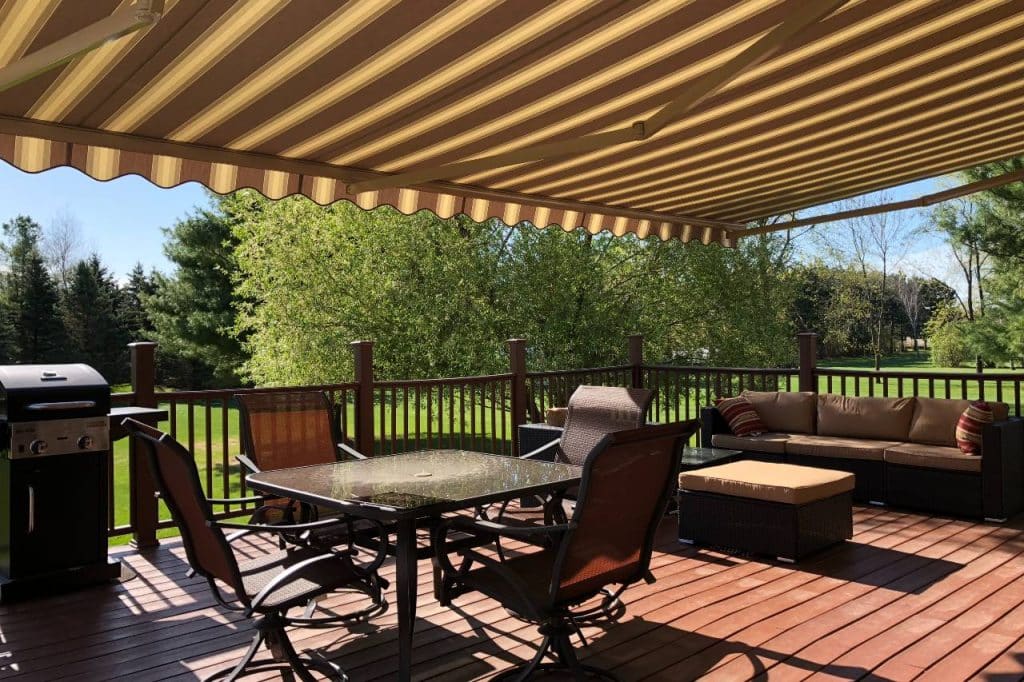
The mechanics are straightforward. A retractable awning mounts to your home’s exterior wall, anchored directly into the studs or the header above a door or window. Fabric unfurls from a roller bar, and high-tension lateral arms push outward to keep the canopy taut as it extends. When you’re done, it rolls back up cleanly against the house.
That retractability is the core advantage over a fixed pergola or permanent patio cover. You control the shade. Want full sun for a winter afternoon? Retract it. Hosting a backyard dinner under the stars? Retract it. Afternoon heat bearing down at 3 PM? Extend it in seconds.
Sunsetter is one of North America’s top-rated retractable awning brands, available in both manual and motorized models. According to Sunsetter’s product specifications, extending the awning can lower your patio or deck surface temperature by about 20°F, which is the difference between a space you avoid and one you actually use.
Design Options: Making It Look Like It Belongs
A retractable awning shouldn’t look like an afterthought bolted onto your house. The right one looks like it was always part of the design.
Sunsetter and comparable systems offer a wide range of fabric colors, patterns, and UV-resistant finishes, so you can match your home’s exterior palette or add a deliberate contrast. Frame colors can be coordinated with your trim, fascia, or siding. Size and projection options vary to fit everything from a narrow apartment balcony to a wide wraparound deck, so the coverage actually matches your footprint.
The motorized vs. manual choice is worth thinking through as a lifestyle decision, not just a technical one. Manual systems are reliable and straightforward. Motorized systems let you extend or retract with a remote, a wall switch, a smartphone app, or even a voice assistant. For a large deck or a homeowner who wants effortless daily use, motorization makes the awning something you actually reach for every day rather than something you occasionally wrestle with.
Smart sensors take it a step further. Wind sensors can trigger automatic retraction when gusts reach a set threshold, and sun sensors can extend the awning automatically when solar intensity climbs. For Tri-Cities homeowners who want hands-free comfort, that kind of integration is genuinely useful.
Durability in the Tri-Cities Climate
This is the question most local homeowners ask first, and it’s the right one. Our climate is not gentle. Intense UV exposure, dry summer heat, and wind that can arrive fast and strong, especially in South Richland and along the ridges of Kennewick, all put outdoor products to the test.
Here’s the honest answer. Retractable awnings are built for outdoor exposure. Aluminum frames resist rust and hold up to temperature swings. Weather-resistant fabrics are engineered to handle UV and moisture. Sunsetter awnings are rated to block up to 99% of harmful UV rays, which protects both the people underneath and the furniture and flooring nearby.
Wind is the variable that requires the most attention. Motorized systems with integrated wind sensors will auto-retract when gusts hit a set threshold, which is a meaningful feature in a region that sees sudden windstorms. That said, no retractable awning is designed to stay extended during high-wind events or storms. Retracting before a storm isn’t a limitation; it’s just the right habit, the same way you’d bring in patio furniture cushions before a hard rain.
Fabric care is simple. A gentle hose-down about once a month keeps the fabric clean and prevents buildup. The one rule that matters most: always let the fabric dry completely before rolling it up. Rolling up damp fabric is how mildew starts, and mildew is the main thing that shortens a fabric’s life. Follow that habit, retract during storms, and a quality awning will serve you for many years.
Installation: Why Professional Matters Here
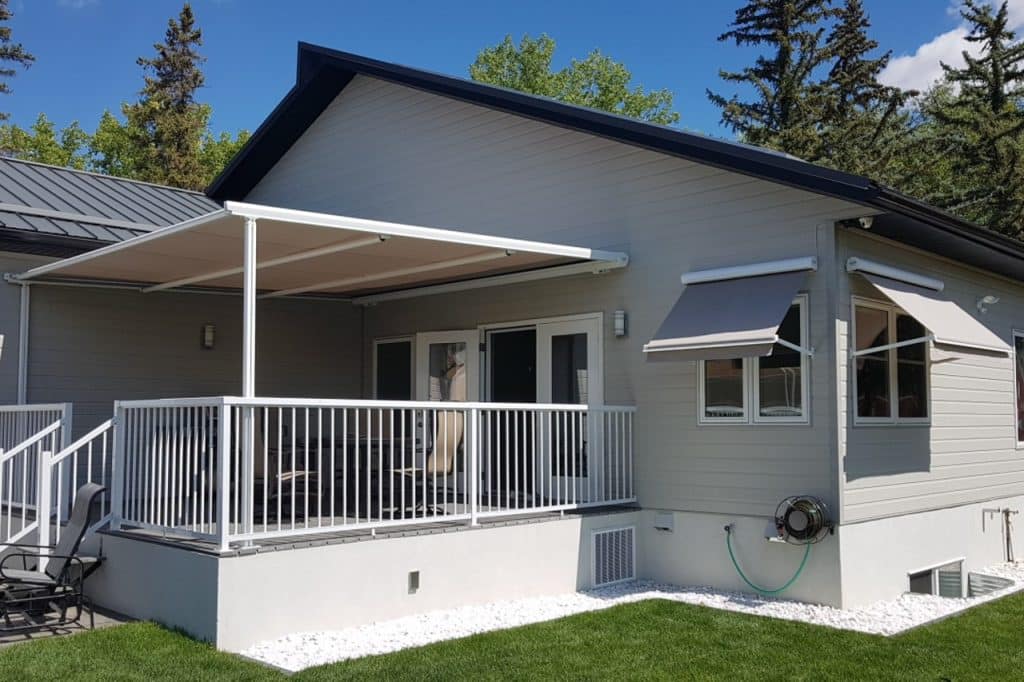
A retractable awning is heavier than it looks, and it acts like a sail when it’s extended. If the mounting isn’t anchored properly into structural framing, the leverage of a fully extended awning can pull away from the wall and cause real damage to your siding and structure.
Most installations require at least 7 feet 6 inches of clearance at the mounting point. That’s a straightforward check on most homes, but it’s one of several factors a professional confirms before anything goes up.
Motorized systems add another layer of complexity. Motor sizing, limit-switch programming, and electrical work all need to be done correctly to protect the motor, the fabric, and your warranty. A limit switch that’s set wrong can cause the motor to over-extend the fabric, which stresses the arms and shortens the system’s life.
At The Blind Guy of Tri-Cities, our installation process starts with a consultation that addresses your specific home, wall configuration, and patio orientation before installation day. If you have an unusual exterior, a non-standard wall height, or questions about HOA color guidelines, those conversations happen upfront. No surprises on the day of install.
The ROI Case: Comfort, Value, and Usable Space
The investment in a retractable awning is real. So is the return.
On the financial side, a retractable awning adds usable outdoor square footage to your home without the permit requirements, foundation work, or tax implications of a permanent addition. It’s a meaningful selling point for future buyers, who see a comfortable, move-in-ready outdoor space rather than a scorching concrete slab.
There’s an energy angle worth considering, too. When an awning shades the windows and glass sliders that face the afternoon sun, it stops solar heat before it enters your home. The U.S. Department of Energy has noted that window treatments shading glass can reduce solar heat gain significantly, lowering the workload on your air conditioning during peak summer hours. An awning that covers a south- or west-facing glass slider is doing real work on your utility bill, not just your comfort.
The lifestyle ROI is harder to put a number on, but most homeowners feel it immediately. Hosting a graduation party in June without everyone retreating inside by noon. Letting the kids play outside on a Saturday morning without worrying about heat exposure. Sitting with a cup of coffee on the deck at 8 AM before the heat builds. That’s the space you paid for when you bought your home. A retractable awning gives it back to you.
Combining Awnings with Patio Shades: A Local Expert Tip
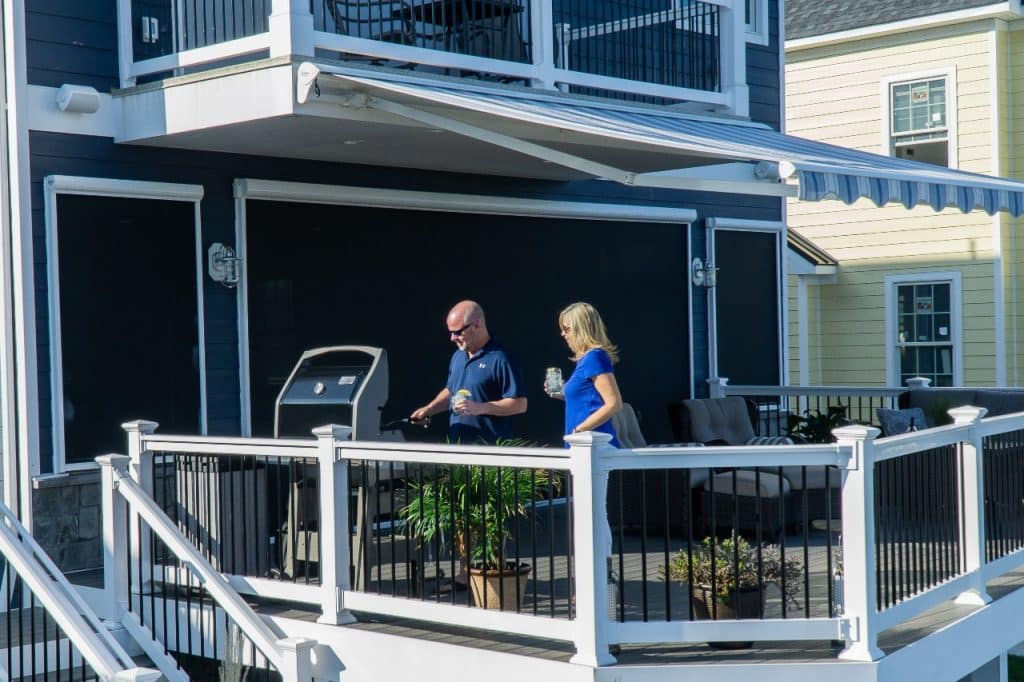
An awning handles overhead and midday sun beautifully. What it doesn’t address is low-angle morning or evening glare coming in from the side.
That’s where exterior patio shades come in. Patio shades work as vertical screens, blocking that angled light and reducing heat before it reaches your glass. Many Tri-Cities homeowners combine a retractable awning overhead with patio shades on the sides for full coverage across different times of day and different seasons. It’s not about buying more product; it’s about solving the whole problem rather than half of it.
If your patio faces west and you’re dealing with brutal late-afternoon sun, that combination is worth discussing during your consultation.
Ready to Reclaim Your Outdoor Space? Start with a Free Consultation.
Every home is different. Your patio’s orientation, your wall configuration, your HOA guidelines, and how you actually use your outdoor space all factor into which system makes sense for you. That’s exactly what a free consultation is for.
The Blind Guy of Tri-Cities serves homeowners in Richland, Kennewick, Pasco, and Wenatchee. We’ll walk through your space, answer your questions, and help you find the right custom retractable awning for your home, your patio, and your budget. No pressure, no guesswork.
Schedule your free consultation today and find out what your outdoor space could feel like with the right shade solution in place.